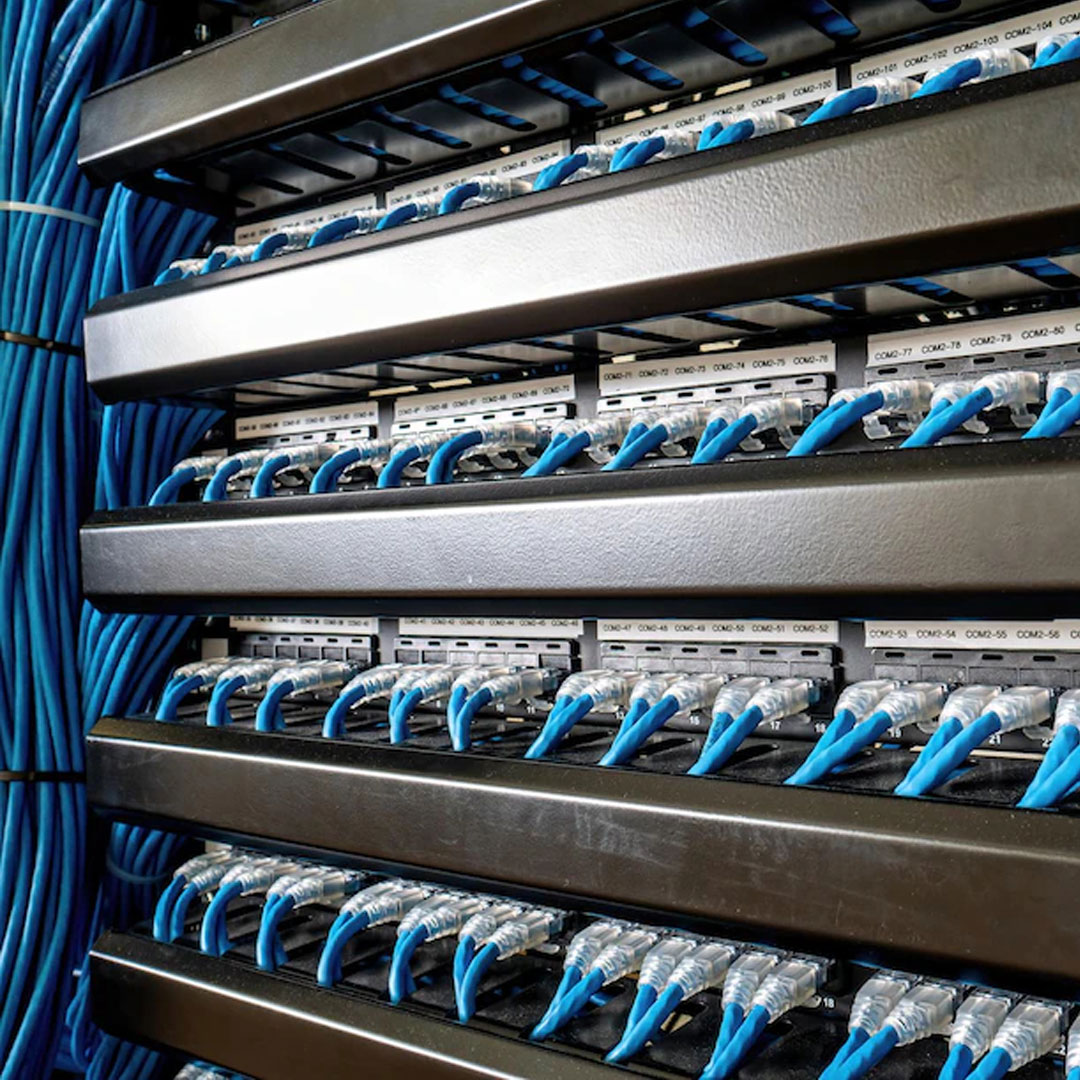
Structured Cabling Solutions
What Are Structured Cabling Solutions?
Structured cabling is the physical network infrastructure designed according to defined standards and engineering principles to support data, voice, video and IP-based communications within a building, facility or campus.
Computers, IP phones, access points, IP cameras, servers and other network devices connect to active network systems through this physical infrastructure. A properly engineered structured cabling system is critical to network performance, manageability, scalability and future expansion.
Learn more about Pegon Proje's engineering approach to copper and fiber physical network infrastructure on our Passive Network Solutions page.
Why Is Structured Cabling Necessary?
To benefit from the capabilities of network equipment, the physical infrastructure connecting those devices must also meet the system requirements. Upgrading active equipment such as switches or access points alone cannot eliminate the limitations created by an inadequate or poorly designed cabling infrastructure.
A properly designed and installed structured cabling infrastructure can:
-
Support the data rates required by the network.
-
Help reduce connectivity and performance problems caused by cabling.
-
Simplify troubleshooting, maintenance and modification processes.
-
Make the addition of new users and network devices more manageable.
-
Help meet the infrastructure requirements of technologies such as Wi-Fi 6/6E/7 access points, high-speed Ethernet connections, IP cameras, IoT devices and PoE-based systems.
Structured cabling should therefore be engineered not only for the initial installation but also with the facility's future digital infrastructure requirements in mind.
What Are the Main Components of Structured Cabling?
A structured cabling system consists of more than data cables alone. End-to-end performance requires cables, connectivity hardware, cabinets, patch panels, patch cords, fiber infrastructure, labeling and testing processes to be considered together.
Copper Cabling
Different cable categories such as Cat6 and Cat6A can be used in copper Ethernet infrastructure. The appropriate category should be determined according to the target data rate, connection distance, PoE requirements, electromagnetic environment and future capacity requirements.
For a more detailed comparison of Cat6, Cat6A, Cat7 and Cat8 and their shielding constructions, see our Cat6, Cat6A, Cat7 and Cat8 Cable Selection Guide.
Fiber Optic Infrastructure
Fiber optic cabling plays an important role in building backbones, campus connections, data centers and applications requiring high bandwidth or longer transmission distances.
Fiber type, connection distance, target data rate, optical interfaces of active equipment and future capacity requirements should be evaluated together.
Depending on project requirements, factory pre-terminated and tested fiber solutions within our Custom Network Fiber Solutions can be used. This approach can reduce field fiber termination work and help provide a more controlled implementation process.
Patch Panels, Outlets and Patch Cords
Patch panels, data outlets, keystone jacks and patch cords are part of the end-to-end performance of a structured cabling system. Therefore, selecting the category of the main cable alone is not sufficient; connectivity hardware should also be compatible with the designed performance class.
Cabinets and Cable Management
Cabinets provide an organized and accessible location for patch panels, switches, fiber distribution units and other network equipment.
Proper cable management, labeling and pathway planning help make maintenance, troubleshooting and future modifications more controlled.
What Is the Difference Between Structured Cabling and Active Networking?
Structured cabling provides the physical transport infrastructure of the network, while switches, routers, firewalls, access points and similar equipment form the active network layer.
These two infrastructures should not be considered independently. For example, when a high-speed access point is planned, switch port capacity, PoE power budget and the physical cabling infrastructure should be evaluated together with the device requirements.
Explore our solutions for switches, access points and other active network components on our Active Network Solutions page.
What Should Be Considered in a Structured Cabling Project?
Determining the cable category alone is not sufficient for a reliable structured cabling project. The following criteria should be evaluated together during the design and implementation stages:
-
Capacity: Current device count and future expansion requirements.
-
Data Rate: Ethernet technologies and endpoint requirements.
-
Distance: Appropriate selection of copper or fiber infrastructure according to connection distance.
-
PoE: Power requirements of IP cameras, access points, IP phones and other PoE devices.
-
Electromagnetic Environment: Evaluation of power cables, motors and other electromagnetic interference sources, particularly in industrial facilities.
-
Fire Performance: Selection of cable jacket and fire-performance characteristics according to the project scope and applicable requirements.
-
Cable Pathways: Appropriate planning of trays, shafts, cabinets and transition points.
-
Labeling and Documentation: Identification of connections and creation of up-to-date infrastructure documentation.
Why Are Post-Installation Testing and Certification Important?
Selecting the correct cable does not by itself demonstrate that the installed link achieves the intended performance. Termination errors, excessive bending, mechanical pressure on cables and other installation-related issues can affect electrical performance.
Depending on project requirements, permanent link or channel tests can be performed on copper cabling to verify length, insertion loss, Return Loss, NEXT and other applicable performance parameters.
For fiber optic infrastructure, optical loss measurements and, where required by the project, OTDR testing can be performed.
Recording test results provides a technical reference for commissioning, maintenance, fault analysis and future modifications.
Pegon Proje's Structured Cabling Approach
At Pegon Proje, we do not treat structured cabling as simply installing cables. We consider the facility's active network architecture, endpoint devices, PoE requirements, fiber backbone, cabinet infrastructure and future capacity requirements together.
-
Technical Site Survey: Existing infrastructure, device locations, cabinet locations and cable pathways are evaluated.
-
Engineering Design: Copper and fiber infrastructure, cabinets, patch panels and connection points are planned according to system requirements.
-
Product Selection: Cable category, fiber type, connectivity hardware and other passive components are selected according to project requirements.
-
Implementation: Cabling, termination, cabinet organization and labeling are carried out according to the project plan.
-
Testing and Documentation: Relevant connections are tested according to project criteria and the results are documented.
Let's Evaluate Your Structured Cabling Infrastructure Together
In offices, hotels, factories, industrial facilities, data centers and commercial buildings, a properly engineered structured cabling infrastructure forms the foundation for reliable and manageable network operation.
At Pegon Proje, we address the structured cabling process end to end, from technical site survey and engineering design to copper and fiber infrastructure installation, testing, labeling and documentation.
Explore our copper and fiber infrastructure solutions on our Passive Network Solutions page.
Phone: +90 533 920 99 14
Email: pegon@pegonproje.com