End-to-End Project Management and Engineering Power

Our End-to-End Project Management approach begins right from the initial design phase where project needs are defined. We listen to you, applying engineering discipline to select the most suitable brands and implementation methods for your project.

Our goal is to meticulously manage all on-site processes (team, equipment, time) through precise project design and optimized procurement management. This approach ensures a flawless delivery within the agreed timeline and at an optimum cost.

Discover Pegon values

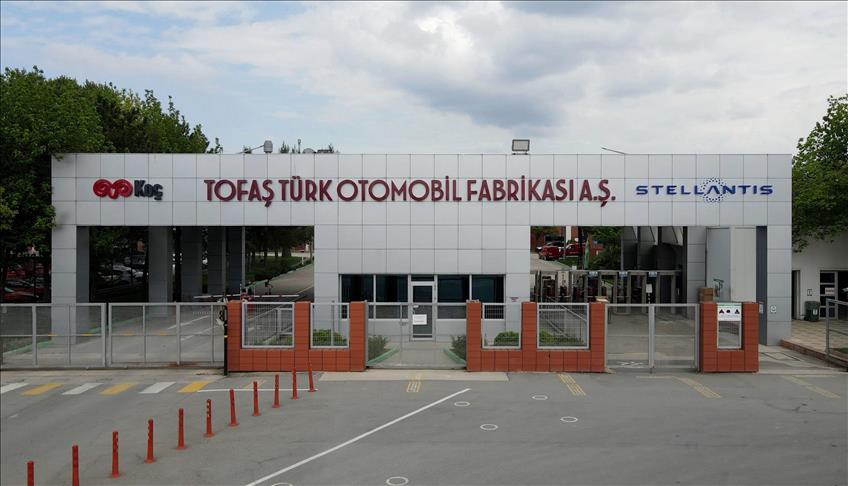
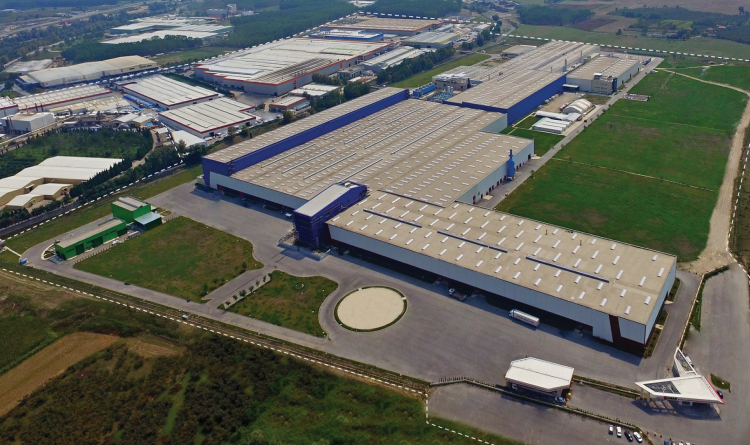
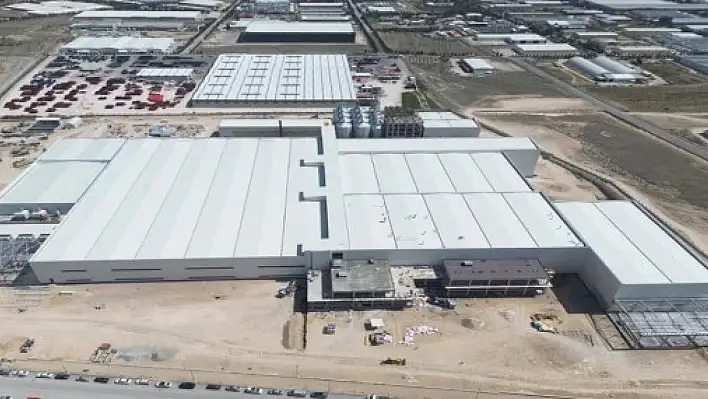
ASAŞ 150 MN Extrusion Press Facility Structural Cabling Project Pegon Proje and Legrand Signature on Europe’s Largest Production Line The entire structural cabling infrastructure of the 150 MN (15,000 Ton) press investment—the largest extrusion press in Europe, implemented by ASAŞ, one of Turkey’s leading industrial enterprises at its Sakarya facilities—has been brought to life through Pegon Proje engineering and high-performance solutions. We designed and commissioned the digital backbone of this massive facility according to the high speed, continuity, and maximum reliability standards required by heavy industrial conditions. Solutions Provided Within the Scope of the Project: Legrand Structural Cabling Infrastructure: Legrand’s fiber optic and copper cabling systems, fully compliant with industrial standards, were preferred for the facility’s critical production and management network. High-Performance Data Transmission: Data traffic between automation systems on the production line and all units is secured with Legrand’s end-to-end cabling solutions that minimize signal loss. Industrial Durability: An infrastructure architecture has been created to provide the highest level of resistance against electromagnetic interference and harsh operating conditions in a heavy industrial environment. Engineering and Integration: By combining Pegon Proje’s design expertise with our technological power, flawless network performance has been achieved across the facility’s extensive layout. Why Is This Project Important? The ASAŞ 150 MN investment is a technological base representing Turkey’s production power, serving strategic sectors from rail systems to aviation. As Pegon Proje, we have successfully fulfilled the responsibility of managing the entire digital infrastructure of this facility with world-class equipment and meticulous craftsmanship. Project Profile: Customer: ASAŞ Alüminyum Location: Sakarya, Turkey Solution Partner: Pegon Proje Technologies Used: Legrand Fiber Optic Systems, Legrand Copper Cabling, Industrial Network Infrastructure, ABB Electric Vehicle Charging Station, Legrand Cable Trunking Systems.

Yayla Gıda Niğde Factory Structural Cabling and Infrastructure Project Uninterrupted Communication in Food Technology: Pegon Proje and Legrand Solutions All structural cabling, termination, and commissioning processes of the modern production facility of Yayla Gıda, a global power in Turkey’s food sector, located in Niğde, have been successfully completed by Pegon Proje. In this facility, which features high hygiene and automation standards, end-to-end Legrand product groups were preferred to ensure the continuity of data transmission. Operations Performed Within the Scope of the Project: End-to-End Fiber and Copper Cabling: A high-performance Legrand fiber and copper cabling infrastructure was established to manage network traffic between the factory's production lines and administrative units. Professional Termination Services: All fiber optic and copper cable lines were terminated by our expert team in accordance with industrial standards. Testing and Certification: All installed lines were tested according to international standards, and the facility was fully commissioned after verifying performance values. Industrial Data Security: A stable and scalable network architecture was created to withstand environmental factors within the food production parkour. Why Is This Project Important? The Yayla Gıda Niğde Factory is an exemplary facility in its sector with its digitalized production processes. As Pegon Proje, we have guaranteed the fast and secure flow of data at every stage of production by building the entire communication infrastructure of this facility with Legrand quality. Project Profile: Customer: Yayla Gıda Location: Niğde, Turkey Solution Partner: Pegon Proje Technologies Used: Legrand Fiber Optic Solutions, Legrand Copper Cabling Systems, System Room Integration.

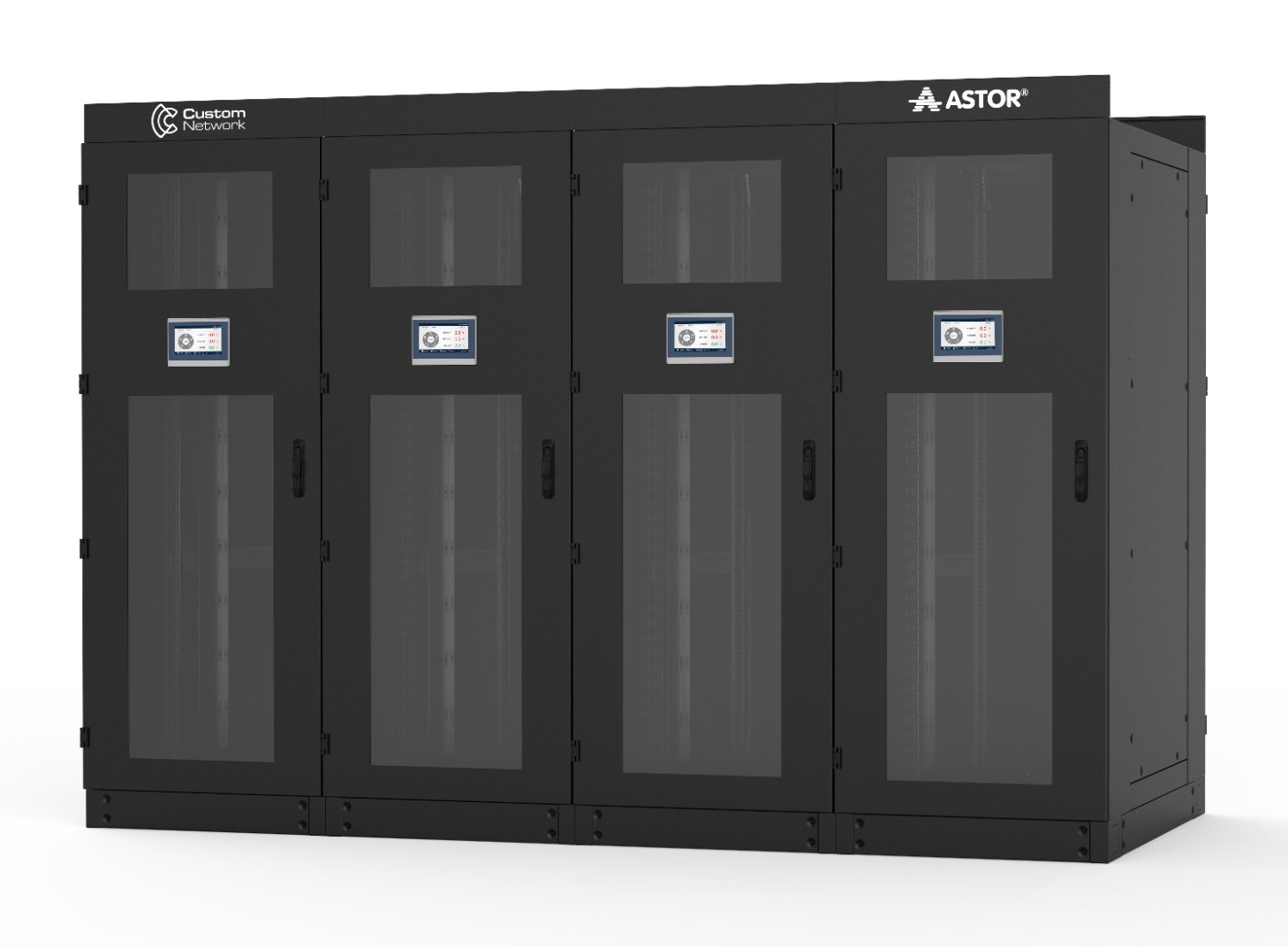
Astor New Factory Facility: Structural Cabling Product Supply Pegon Proje and Legrand Signature on Europe’s Largest Production Line The entire structural cabling infrastructure of the 150 MN (15,000 Ton) press investment—the largest extrusion press in Europe, implemented by ASAŞ, one of Turkey’s leading industrial enterprises at its Sakarya facilities—has been brought to life through Pegon Proje engineering and Legrand’s high-performance solutions. We designed and commissioned the digital backbone of this massive facility according to the high speed, continuity, and maximum reliability standards required by heavy industrial conditions. Solutions Provided Within the Scope of the Project: Legrand Structural Cabling Infrastructure: Legrand’s fiber optic and copper cabling systems, fully compliant with industrial standards, were preferred for the facility’s critical production and management network. High-Performance Data Transmission: Data traffic between automation systems on the production line and all units is secured with Legrand’s end-to-end cabling solutions that minimize signal loss. Industrial Durability: An infrastructure architecture has been created to provide the highest level of resistance against electromagnetic interference and harsh operating conditions in a heavy industrial environment. Engineering and Integration: By combining Pegon Proje’s design expertise with Legrand’s technological power, flawless network performance has been achieved across the facility’s extensive layout. Why Is This Project Important? The ASAŞ 150 MN investment is a technological base representing Turkey’s production power, serving strategic sectors from rail systems to aviation. As Pegon Proje, we have successfully fulfilled the responsibility of managing the entire digital infrastructure of this facility with world-class equipment and meticulous craftsmanship. Project Profile: Customer: ASAŞ Alüminyum Location: Sakarya, Turkey Solution Partner: Pegon Proje Technologies Used: Legrand Fiber Optic Systems, Legrand Copper Cabling, Industrial Network Infrastructure, ABB Electric Vehicle Charging Station, Legrand Cable Trunking Systems.

How to Choose a Cat Cable? Low Current Cat6-Cat8 Selection Guide The speed and security of your digital infrastructure depend on the quality of the invisible cables. In your low current systems, the way to prevent data loss and costly malfunctions is to choose the correct Cat standard and shielding structure. In this technical guide, learn about the differences, use cases of Cat6, Cat7, and Cat8 cables, and how to make the best choice for your project with Pegon Proje consultancy. 1. Cat Category and Bandwidth Comparison (Cat6 vs Cat6A vs Cat7 vs Cat8) Choosing the appropriate Cat standard for your structured cabling project's performance requirements determines your network's future expansion capacity. The following table compares the technical specifications of the most common data cables: Cat Standard Maximum Data Hızı Maximum Bandwidth (MHz) Maximum Distance Ideal Use Case and Project Type Cat6 1 Gbps 250 MHz 100 Metre Standard office networks, entry-level IP camera systems. Cat6A 10 Gbps 500 MHz 100 Metre Enterprise backbone infrastructures, Wi-Fi 6/7 points, 4K imaging systems. Cat7 10 Gbps 600 MHz 100 Metre Industrial plants, sites with very high electromagnetic interference (EMI). Cat8 40 Gbps 2000 MHz 30 Metre Data centers, intra-cabinet high-speed connections. 2. Cable Shielding Structure Selection (S/FTP, U/UTP, F/UTP) Another important point to consider when choosing cables in low current systems is the cable's level of protection against surrounding electromagnetic interference (EMI), rather than just its speed. The following shielding types are preferred to protect signal quality and data integrity: U/UTP (Unshielded Twisted Pair): Unshielded. An economical solution for standard office environments with low electromagnetic interference. F/UTP (Foil Twisted Pair): There is a common aluminum foil around all the pairs. Minimizes interaction between cable bundles (Alien Crosstalk). U/FTP (Individual Foil Twisted Pair): Each pair is wrapped in its own foil. It is one of the most balanced solutions in terms of signal clarity and interference resistance. F/FTP (Double Foil Twisted Pair): Both the pairs and the outer sheath are foiled. Preferred in systems requiring critical and sensitive data transmission. S/FTP (Shielded Foiled Twisted Pair): The pairs are individually foiled, and the outer part is a durable metal braid shield. Mandatory for factories, transitions near high voltage lines, and challenging sites with the highest interference risk. 3. Detailed Cable Preference by Use Case and Project Type Each system in your low current project has unique cabling requirements. Here are recommendations for some key applications: A. IP Camera and Video Surveillance Systems (VSS) Cabling Standard Applications (2MP-4MP): For cost-oriented projects, Cat6 U/UTP is generally sufficient. 4K and Panoramic Cameras: Cat6A U/FTP should be preferred to prevent high data traffic and signal noise. PTZ and Heated Cameras: These cameras draw high power (PoE++). To prevent the camera from shutting down due to voltage drop, 23 AWG (thick cross-section) pure copper Cat6A cables should be used. Elevator IP Camera Systems: Continuous movement can break standard cables over time. "Stranded" (multi-wire/flexible) structure S/FTP cable must be used here. B. IP Paging and Voice Alarm Systems Cables Energy Efficiency and Voltage Balance: Since IP speakers are powered over PoE (Power over Ethernet), low-resistance 23 AWG Pure Copper (Solid Bare Copper) Cat6A cables should be selected to keep the voltage at the end of the line stable. Interference Management and Sound Clarity: Voice packets are extremely sensitive to interference; foiled (U/FTP or F/UTP) structures must be used to prevent "hum" sound caused by power lines. C. IP-Based Fire Detection Systems and Cable Specifications LSZH (Low Smoke Zero Halogen) Sheath: The use of LSZH sheaths, which do not emit toxic gases and do not obscure visibility during a fire, is a legal requirement. False Alarm Protection: Highly shielded S/FTP or F/FTP cables should be preferred for critical communication between fire panels to prevent false alarms and system downtime caused by interference. 4. Summary and Pegon Proje Low Current Consultancy It should not be forgotten that structured cabling is not just about pulling cables; it is about designing at least the next 10 years and sustainability of the project. Choosing the right cross-section (AWG), correct shielding structure, and sheathing in compliance with standards (LSZH) ensures your system's longevity and trouble-free operation. As Pegon Proje, we are by your side in your low current systems consultancy and project design processes to determine the most suitable data cable type for your project needs and to establish an infrastructure that complies with international standards. Contact us at www.pegonproje.com for expert engineering support and project-specific solutions.

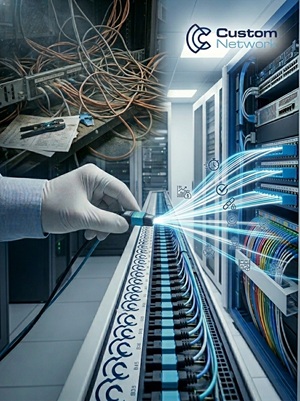
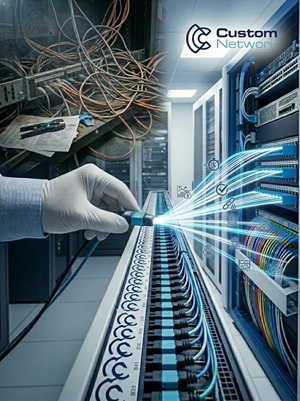
Golden Rules for Cable Installation for a Flawless Network Infrastructure What should you consider to prevent data loss when installing copper and fiber cables on-site? A professional guide in 5 steps, from bending radius to slack management rules. The heart of a low-current project beats in the invisible cable pathways. Even if you use the highest quality hardware, if physical standards are not met during cable pulling, your system will never operate at full performance. Here are the technical details that will extend the life of your project: 1. Risk of "Crushing" and "Kinking" in Copper Cables Copper cables (Cat6, Cat6A) may appear durable from the outside, but their internal twisted pair structure is quite sensitive. Bending Radius: Never turn a cable at a sharp right angle around a corner. Leaving a curve of at least 4 times the outer diameter of the cable prevents signal reflection (Return Loss). The Clamp Trap: Tightening plastic cable ties too much distorts the impedance value of the cable. As Pegon Proje, we always recommend the use of Velcro (hook and loop) straps. 2. Critical Curvature and Mathematical Limits in Fiber Optics Fiber optic cables have a much more sensitive "bending tolerance" compared to copper. The following mathematical formulas must be applied to ensure that light transmission inside the glass fiber is not disrupted: Dynamic (During Installation): Due to the tension the cable is exposed to while being pulled, a curve of at least 20 times ($20 \times D$) the outer diameter must be maintained. Static (After Installation): Once the cable is placed and fixed in its position, a curve of at least 10 times ($10 \times D$) the outer diameter must be preserved. Example: When pulling a fiber cable with a 6 mm diameter, you must allow a radius of at least 12 cm, and 6 cm when fixing it. Sharp turns cause light to leak out (Attenuation) and result in data loss. 3. The Art of Slack Management The job isn't finished once the cable reaches its destination. A "slack" must be left for future fault intervention or relocation: System Room / Cabinet Side: Leaving at least 3-5 meters of spare cable (in a loop or S-shape) at the back of the cabinet is a lifesaver during patch panel revisions. Field / Outlet Side: A slack of 50 cm - 1 meter left behind the wall outlet or in the ceiling void allows for compensation of installation errors. 4. Electromagnetic Interference (EMI) Protection Data cables must stay away from power lines. Leaving a distance of at least 20 cm between them or using trays with metal separators is a standard requirement to prevent "packet loss." 5. Labeling: The Identity Card of the System A lack of labeling in the system infrastructure increases the Mean Time to Repair (MTTR) to unacceptable levels and creates a risk of hardware damage due to incorrect port connections. Labeling performed according to standards at both ends reduces installation errors to zero while increasing operational speed by 80% during service interventions. Remember: an unlabeled cable is an orphaned cable. Professional Engineering Solutions As Pegon Proje, we are by your side for your low-current system consultancy, data center solutions, and network infrastructure projects, especially in the Istanbul and Antalya regions. With our Custom Network brand's pre-terminated fiber solutions, we provide 80%+ time savings in installation and zero risk of project error. Are you looking for a professional touch for your infrastructure project? To get a quote from our technical team and plan your project according to standards, you can visit www.pegonproje.com or contact us directly.

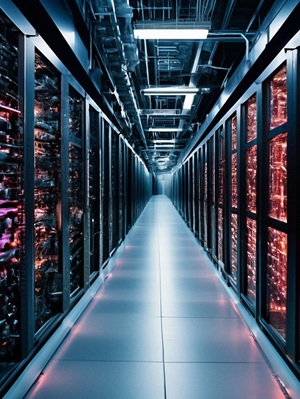
800G and Beyond in Data Centers: The Transformation of Optical Infrastructure in the Era of AI Today, data centers have evolved from mere storage facilities into the heart of High-Performance Computing (HPC). Especially as of 2026, the explosion of Artificial Intelligence (AI) and Machine Learning (ML) projects is driving the demand for bandwidth at a geometric rate. Legacy 10G and 40G standards are rapidly being replaced by 400G and 800G architectures. Speed Milestones: Transitioning from 100G to 800G This massive surge in data traffic necessitates radical changes in infrastructure components. While 100G is currently the backbone of many corporate structures, the massive datasets required to train AI models make 800G switching capacities mandatory. Maintaining signal integrity at these speeds is only possible through high-quality fiber infrastructure, not just the hardware itself. Why Does AI Demand More Speed? (4 Key Examples) AI operations are built on the principles of "Low Latency" and "High Continuity." Here are the real-world scenarios making 800G essential: Inter-GPU Group Synchronization: AI models require thousands of GPUs to work in parallel. These processors exchange massive data packets every millisecond to synchronize calculations. If the fiber connection is slow, thousands of powerful processors sit idle waiting for the slowest data transfer—meaning millions of dollars in hardware investment goes to waste. Instant Decision Mechanisms: In systems like autonomous driving or real-time medical analysis, data processing must occur in milliseconds, not seconds. 800G increases the "highway speed" of data, ensuring these critical decisions are made without delay. Transferring Massive Datasets: To train an AI, entire digital libraries and high-resolution images flow from storage units to processors. Older connections like 10G or 40G create "bottlenecks" in this massive traffic, causing system stalls. Natural Language Processing (NLP): When interacting with models like Siri or ChatGPT, billions of parameters are filtered in the background. The ability to provide instant responses to these complex queries is made possible by 800G backbone connections between servers. Custom Network: No Room for Error at High Speeds In frontier technologies like 800G, a microscopic dust particle on a fiber connector or a millimeter-scale splicing error can bring down the entire line. At Pegon Proje, our Custom Network brand eliminates these risks with pre-terminated fiber solutions: Ultra-Low Loss: Since the dB loss budget is extremely tight in 400G and 800G connections, factory termination is vital. MPO/MTP Connector Technology: In high-density data centers, we reduce installation time by 80% with our MPO/MTP solutions that carry 8 or 12 fibers through a single connector. Future-Proofing: The OM5 or OS2 infrastructures we install today are already being prepared for tomorrow's 1.6T (Terabit) speeds. Conclusion Data centers are now pursuing not just speed, but also operational efficiency and sustainability. As Pegon Proje, with our low-current systems consultancy and Custom Network brand, we are preparing our clients for the speed requirements of the AI era.

AI-Powered Video Analytics in Industrial Facilities Don’t Just Watch Your Cameras, Let Them Inspect Your Facility: AI-Based Industrial Security Solutions In a modern industrial facility, there may be hundreds, or even thousands, of cameras. However, the true power of these cameras lies not in their high resolution, but in how they process the data they see. In traditional systems, a security officer is expected to monitor dozens of screens simultaneously and attentively. Yet, research shows that after just 20 minutes, human attention spans drop by as much as 95%. At Pegon Project, through our AI-Powered Video Analytics solutions, we transform your cameras from passive recording devices into "digital inspectors" that work 24/7 without fatigue, never missing a single detail. 1. Situational Analysis: "Watching After the Fact is Not Enough!" The biggest problem we encounter in many factories is that video surveillance systems are used only for "forensic" purposes—meaning recordings are reviewed only after a theft, accident, or malfunction has already occurred. The Problem: Inability to intervene in real-time, production downtime, loss of life due to work accidents, and heavy legal liabilities. The Risk: A PPE violation (like a missing helmet) or unauthorized entry into a restricted zone that goes unnoticed by a security guard can lead to irreparable consequences. 2. Understanding Concerns: Fear of Complex Installation and High Costs Factory managers are often concerned that AI-based systems are too complex to install, require scrapping existing cameras, or will constantly trigger "false alarms." The Concern: "Will we have to completely replace our existing infrastructure? Will this system exceed our budget?" The Pegon Response: With our flexible IP-based solutions, we can make most of your existing cameras AI-capable (via edge-based or server-based analytics). Thanks to the speed and stability of our Custom Network infrastructure, we minimize false alarms and unleash the true performance of the system. 3. The Pegon Project Difference: Operational Depth and Functional Integration The AI-powered video analytics systems we install do more than just catch intruders; they contribute directly to the facility’s operational efficiency and OHS (Occupational Health and Safety) processes. OHS Inspection: Cameras perform real-time checks for Personal Protective Equipment (PPE) such as helmets, vests, and gloves. In case of a violation, the system instantly sends an alert to the OHS specialist or site supervisor. Virtual Perimeters and Zone Intrusion: Virtual boundaries are drawn between forklift paths and pedestrian walkways. If a pedestrian enters a restricted zone or a forklift approaches a dangerous area, the system triggers an automatic alarm. This is vital for preventing forklift-pedestrian collisions. Fire and Smoke Detection: Traditional smoke detectors may not trigger an alarm until smoke reaches the ceiling. AI cameras, however, can detect flames or smoke within seconds at the very early stages, preventing major disasters. 4. Why AI-Based Video Analytics? Unlike traditional "motion detection" systems, AI systems can distinguish between humans, vehicles, and objects. Flexibility: Different analytical rules can be applied to different areas of the facility. While theft analysis is performed in the warehouse area, OHS analysis can be run on the production line. Efficiency: By reducing false alarms by over 90%, it allows security personnel to focus only on real threats. This leads to significant savings in operational costs (OPEX) and an increase in productivity.

News