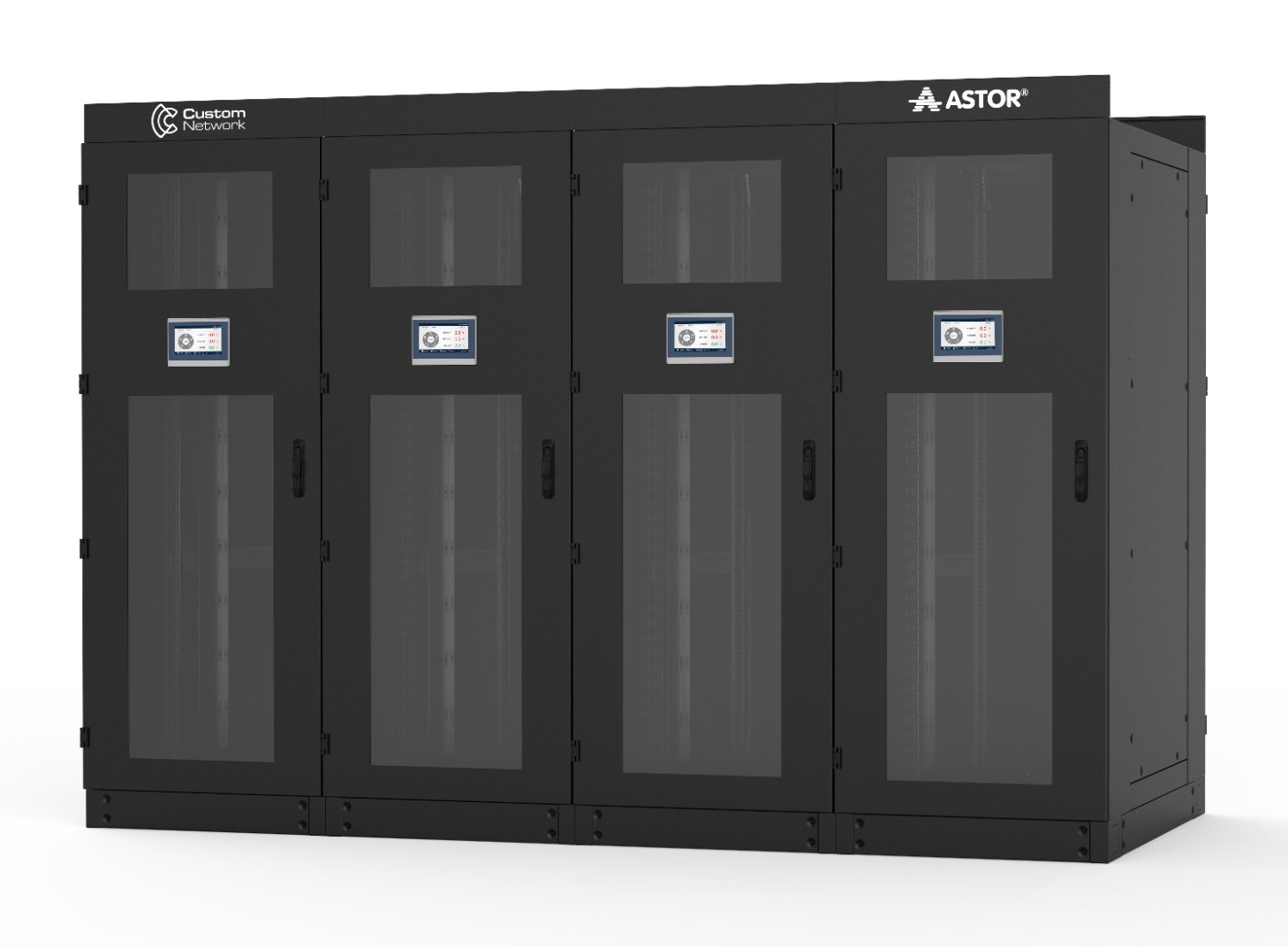
What is a Micro Data Center (Micro DC)? Benefits and Strategy. Paradigm Shift in Data Centers: Micro Data Center Strategy With the acceleration of digital transformation, data generation is shifting from centralized structures toward the "edge." This transformation reveals the inadequacies of traditional data center architectures in terms of latency, cost, and flexibility. At this juncture, Micro Data Center (Micro DC) solutions—with their integrated, modular, and autonomous structures—are becoming a vital component of next-generation infrastructure strategies. Micro Data Centers consolidate all the critical functions of traditional facilities into a compact footprint, providing organizations with operational agility and scalability. This article explores their role in the edge computing ecosystem, their modular architecture, and the technical advantages they offer. 1. Architectural Integrity: An Integrated System at Rack Scale A Micro Data Center is more than just a cabinet. It is an independent infrastructure solution created by integrating power management (UPS, PDU), precision cooling, fire suppression, security, and environmental monitoring systems within a factory environment. Advanced Engineering and Adaptability: All components can be selected and configured based on specific project requirements. Every element—from cabinet dimensions and power capacity to cooling types and security systems—can be custom-designed for the application. Operational Continuity and Durability: Factory-verified grounding and shielding designs ensure high resistance to EMI (Electromagnetic Interference) and RFI (Radio Frequency Interference). Combined with mechanical durability, this structure supports seamless operation even in harsh field conditions. Precision Cooling and Energy Efficiency: In-rack closed-circuit cooling systems target only active IT equipment, increasing energy efficiency and contributing to lower PUE values. PUE (Power Usage Effectiveness): An efficiency metric indicating how much of the total energy consumed is used by IT equipment. A value approaching 1.0 indicates maximum infrastructure efficiency. 2. Proactive Security and Environmental Monitoring Micro Data Centers are equipped with advanced monitoring systems that minimize physical and environmental risks. 24/7 Environmental Monitoring: Parameters such as temperature, humidity, water leakage, and smoke are tracked in real-time. Abnormalities in power and cooling systems are detected early, allowing for proactive intervention. Access Control: Unauthorized access is prevented through biometric authentication and smart card reader systems. Integrated Video Surveillance: IP-based camera systems ensure that all physical interactions are recorded and can be verified remotely. 3. Edge Computing and Low Latency Management IoT, smart manufacturing, and real-time analytics require data to be processed close to the source. Micro Data Centers: Provide ultra-low latency by processing data locally (typically within the 5–10 ms range). Enable continuous operation even during network outages thanks to their network independence. This structure ensures high business continuity, especially for mission-critical operations. 4. Modular Architecture and Scalable Investment Model The requirement for high initial capital expenditure (CAPEX) in traditional data centers is replaced by incremental growth in the Micro DC approach. "Pay-as-you-grow" Model: Start with small capacity. Expand by adding additional racks as needs increase. Eliminate the risk of idle capacity. This approach enhances investment efficiency while providing financial flexibility. 5. Application Areas and Spatial Advantages Space-Constrained Environments: Can be deployed in offices, production facilities, and field locations without the need for additional construction or specialized rooms. Harsh Environmental Conditions: Offers a reliable and isolated infrastructure in mining sites, energy plants, and industrial areas through its protected enclosure. Summary In today's landscape where data generation is moving closer to the source, Micro Data Centers have become a critical part of modern IT infrastructure by providing low latency, high availability, and scalability. With its modular structure, optimized investment model, and advanced monitoring capabilities, the Micro DC approach offers a powerful solution for organizations seeking operational continuity and speed. To manage your data at the source and prepare your infrastructure for the future with a modular strategy, you can contact the expert team at Pegon Proje to co-design customized Micro Data Center solutions for your business.
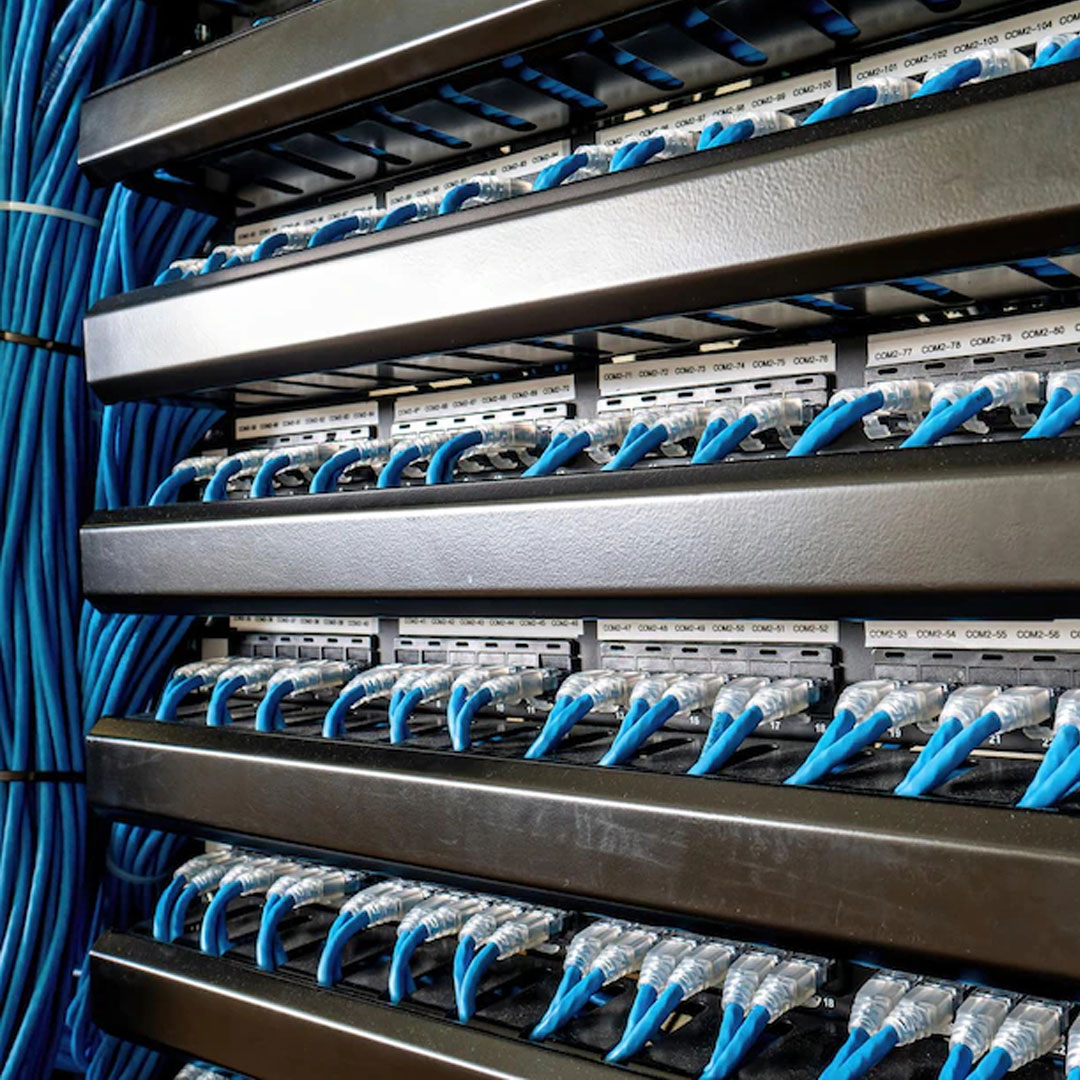
Golden Rules for Cable Installation for a Flawless Network Infrastructure What should you consider to prevent data loss when installing copper and fiber cables on-site? A professional guide in 5 steps, from bending radius to slack management rules. The heart of a low-current project beats in the invisible cable pathways. Even if you use the highest quality hardware, if physical standards are not met during cable pulling, your system will never operate at full performance. Here are the technical details that will extend the life of your project: 1. Risk of "Crushing" and "Kinking" in Copper Cables Copper cables (Cat6, Cat6A) may appear durable from the outside, but their internal twisted pair structure is quite sensitive. Bending Radius: Never turn a cable at a sharp right angle around a corner. Leaving a curve of at least 4 times the outer diameter of the cable prevents signal reflection (Return Loss). The Clamp Trap: Tightening plastic cable ties too much distorts the impedance value of the cable. As Pegon Proje, we always recommend the use of Velcro (hook and loop) straps. 2. Critical Curvature and Mathematical Limits in Fiber Optics Fiber optic cables have a much more sensitive "bending tolerance" compared to copper. The following mathematical formulas must be applied to ensure that light transmission inside the glass fiber is not disrupted: Dynamic (During Installation): Due to the tension the cable is exposed to while being pulled, a curve of at least 20 times ($20 \times D$) the outer diameter must be maintained. Static (After Installation): Once the cable is placed and fixed in its position, a curve of at least 10 times ($10 \times D$) the outer diameter must be preserved. Example: When pulling a fiber cable with a 6 mm diameter, you must allow a radius of at least 12 cm, and 6 cm when fixing it. Sharp turns cause light to leak out (Attenuation) and result in data loss. 3. The Art of Slack Management The job isn't finished once the cable reaches its destination. A "slack" must be left for future fault intervention or relocation: System Room / Cabinet Side: Leaving at least 3-5 meters of spare cable (in a loop or S-shape) at the back of the cabinet is a lifesaver during patch panel revisions. Field / Outlet Side: A slack of 50 cm - 1 meter left behind the wall outlet or in the ceiling void allows for compensation of installation errors. 4. Electromagnetic Interference (EMI) Protection Data cables must stay away from power lines. Leaving a distance of at least 20 cm between them or using trays with metal separators is a standard requirement to prevent "packet loss." 5. Labeling: The Identity Card of the System A lack of labeling in the system infrastructure increases the Mean Time to Repair (MTTR) to unacceptable levels and creates a risk of hardware damage due to incorrect port connections. Labeling performed according to standards at both ends reduces installation errors to zero while increasing operational speed by 80% during service interventions. Remember: an unlabeled cable is an orphaned cable. Professional Engineering Solutions As Pegon Proje, we are by your side for your low-current system consultancy, data center solutions, and network infrastructure projects, especially in the Istanbul and Antalya regions. With our Custom Network brand's pre-terminated fiber solutions, we provide 80%+ time savings in installation and zero risk of project error. Are you looking for a professional touch for your infrastructure project? To get a quote from our technical team and plan your project according to standards, you can visit www.pegonproje.com or contact us directly.

How to Choose a Cat Cable? Low Current Cat6-Cat8 Selection Guide The speed and security of your digital infrastructure depend on the quality of the invisible cables. In your low current systems, the way to prevent data loss and costly malfunctions is to choose the correct Cat standard and shielding structure. In this technical guide, learn about the differences, use cases of Cat6, Cat7, and Cat8 cables, and how to make the best choice for your project with Pegon Proje consultancy. 1. Cat Category and Bandwidth Comparison (Cat6 vs Cat6A vs Cat7 vs Cat8) Choosing the appropriate Cat standard for your structured cabling project's performance requirements determines your network's future expansion capacity. The following table compares the technical specifications of the most common data cables: Cat Standard Maximum Data Hızı Maximum Bandwidth (MHz) Maximum Distance Ideal Use Case and Project Type Cat6 1 Gbps 250 MHz 100 Metre Standard office networks, entry-level IP camera systems. Cat6A 10 Gbps 500 MHz 100 Metre Enterprise backbone infrastructures, Wi-Fi 6/7 points, 4K imaging systems. Cat7 10 Gbps 600 MHz 100 Metre Industrial plants, sites with very high electromagnetic interference (EMI). Cat8 40 Gbps 2000 MHz 30 Metre Data centers, intra-cabinet high-speed connections. 2. Cable Shielding Structure Selection (S/FTP, U/UTP, F/UTP) Another important point to consider when choosing cables in low current systems is the cable's level of protection against surrounding electromagnetic interference (EMI), rather than just its speed. The following shielding types are preferred to protect signal quality and data integrity: U/UTP (Unshielded Twisted Pair): Unshielded. An economical solution for standard office environments with low electromagnetic interference. F/UTP (Foil Twisted Pair): There is a common aluminum foil around all the pairs. Minimizes interaction between cable bundles (Alien Crosstalk). U/FTP (Individual Foil Twisted Pair): Each pair is wrapped in its own foil. It is one of the most balanced solutions in terms of signal clarity and interference resistance. F/FTP (Double Foil Twisted Pair): Both the pairs and the outer sheath are foiled. Preferred in systems requiring critical and sensitive data transmission. S/FTP (Shielded Foiled Twisted Pair): The pairs are individually foiled, and the outer part is a durable metal braid shield. Mandatory for factories, transitions near high voltage lines, and challenging sites with the highest interference risk. 3. Detailed Cable Preference by Use Case and Project Type Each system in your low current project has unique cabling requirements. Here are recommendations for some key applications: A. IP Camera and Video Surveillance Systems (VSS) Cabling Standard Applications (2MP-4MP): For cost-oriented projects, Cat6 U/UTP is generally sufficient. 4K and Panoramic Cameras: Cat6A U/FTP should be preferred to prevent high data traffic and signal noise. PTZ and Heated Cameras: These cameras draw high power (PoE++). To prevent the camera from shutting down due to voltage drop, 23 AWG (thick cross-section) pure copper Cat6A cables should be used. Elevator IP Camera Systems: Continuous movement can break standard cables over time. "Stranded" (multi-wire/flexible) structure S/FTP cable must be used here. B. IP Paging and Voice Alarm Systems Cables Energy Efficiency and Voltage Balance: Since IP speakers are powered over PoE (Power over Ethernet), low-resistance 23 AWG Pure Copper (Solid Bare Copper) Cat6A cables should be selected to keep the voltage at the end of the line stable. Interference Management and Sound Clarity: Voice packets are extremely sensitive to interference; foiled (U/FTP or F/UTP) structures must be used to prevent "hum" sound caused by power lines. C. IP-Based Fire Detection Systems and Cable Specifications LSZH (Low Smoke Zero Halogen) Sheath: The use of LSZH sheaths, which do not emit toxic gases and do not obscure visibility during a fire, is a legal requirement. False Alarm Protection: Highly shielded S/FTP or F/FTP cables should be preferred for critical communication between fire panels to prevent false alarms and system downtime caused by interference. 4. Summary and Pegon Proje Low Current Consultancy It should not be forgotten that structured cabling is not just about pulling cables; it is about designing at least the next 10 years and sustainability of the project. Choosing the right cross-section (AWG), correct shielding structure, and sheathing in compliance with standards (LSZH) ensures your system's longevity and trouble-free operation. As Pegon Proje, we are by your side in your low current systems consultancy and project design processes to determine the most suitable data cable type for your project needs and to establish an infrastructure that complies with international standards. Contact us at www.pegonproje.com for expert engineering support and project-specific solutions.

800G and Beyond in Data Centers: The Transformation of Optical Infrastructure in the Era of AI Today, data centers have evolved from mere storage facilities into the heart of High-Performance Computing (HPC). Especially as of 2026, the explosion of Artificial Intelligence (AI) and Machine Learning (ML) projects is driving the demand for bandwidth at a geometric rate. Legacy 10G and 40G standards are rapidly being replaced by 400G and 800G architectures. Speed Milestones: Transitioning from 100G to 800G This massive surge in data traffic necessitates radical changes in infrastructure components. While 100G is currently the backbone of many corporate structures, the massive datasets required to train AI models make 800G switching capacities mandatory. Maintaining signal integrity at these speeds is only possible through high-quality fiber infrastructure, not just the hardware itself. Why Does AI Demand More Speed? (4 Key Examples) AI operations are built on the principles of "Low Latency" and "High Continuity." Here are the real-world scenarios making 800G essential: Inter-GPU Group Synchronization: AI models require thousands of GPUs to work in parallel. These processors exchange massive data packets every millisecond to synchronize calculations. If the fiber connection is slow, thousands of powerful processors sit idle waiting for the slowest data transfer—meaning millions of dollars in hardware investment goes to waste. Instant Decision Mechanisms: In systems like autonomous driving or real-time medical analysis, data processing must occur in milliseconds, not seconds. 800G increases the "highway speed" of data, ensuring these critical decisions are made without delay. Transferring Massive Datasets: To train an AI, entire digital libraries and high-resolution images flow from storage units to processors. Older connections like 10G or 40G create "bottlenecks" in this massive traffic, causing system stalls. Natural Language Processing (NLP): When interacting with models like Siri or ChatGPT, billions of parameters are filtered in the background. The ability to provide instant responses to these complex queries is made possible by 800G backbone connections between servers. Custom Network: No Room for Error at High Speeds In frontier technologies like 800G, a microscopic dust particle on a fiber connector or a millimeter-scale splicing error can bring down the entire line. At Pegon Proje, our Custom Network brand eliminates these risks with pre-terminated fiber solutions: Ultra-Low Loss: Since the dB loss budget is extremely tight in 400G and 800G connections, factory termination is vital. MPO/MTP Connector Technology: In high-density data centers, we reduce installation time by 80% with our MPO/MTP solutions that carry 8 or 12 fibers through a single connector. Future-Proofing: The OM5 or OS2 infrastructures we install today are already being prepared for tomorrow's 1.6T (Terabit) speeds. Conclusion Data centers are now pursuing not just speed, but also operational efficiency and sustainability. As Pegon Proje, with our low-current systems consultancy and Custom Network brand, we are preparing our clients for the speed requirements of the AI era.

AI-Powered Video Analytics in Industrial Facilities Don’t Just Watch Your Cameras, Let Them Inspect Your Facility: AI-Based Industrial Security Solutions In a modern industrial facility, there may be hundreds, or even thousands, of cameras. However, the true power of these cameras lies not in their high resolution, but in how they process the data they see. In traditional systems, a security officer is expected to monitor dozens of screens simultaneously and attentively. Yet, research shows that after just 20 minutes, human attention spans drop by as much as 95%. At Pegon Project, through our AI-Powered Video Analytics solutions, we transform your cameras from passive recording devices into "digital inspectors" that work 24/7 without fatigue, never missing a single detail. 1. Situational Analysis: "Watching After the Fact is Not Enough!" The biggest problem we encounter in many factories is that video surveillance systems are used only for "forensic" purposes—meaning recordings are reviewed only after a theft, accident, or malfunction has already occurred. The Problem: Inability to intervene in real-time, production downtime, loss of life due to work accidents, and heavy legal liabilities. The Risk: A PPE violation (like a missing helmet) or unauthorized entry into a restricted zone that goes unnoticed by a security guard can lead to irreparable consequences. 2. Understanding Concerns: Fear of Complex Installation and High Costs Factory managers are often concerned that AI-based systems are too complex to install, require scrapping existing cameras, or will constantly trigger "false alarms." The Concern: "Will we have to completely replace our existing infrastructure? Will this system exceed our budget?" The Pegon Response: With our flexible IP-based solutions, we can make most of your existing cameras AI-capable (via edge-based or server-based analytics). Thanks to the speed and stability of our Custom Network infrastructure, we minimize false alarms and unleash the true performance of the system. 3. The Pegon Project Difference: Operational Depth and Functional Integration The AI-powered video analytics systems we install do more than just catch intruders; they contribute directly to the facility’s operational efficiency and OHS (Occupational Health and Safety) processes. OHS Inspection: Cameras perform real-time checks for Personal Protective Equipment (PPE) such as helmets, vests, and gloves. In case of a violation, the system instantly sends an alert to the OHS specialist or site supervisor. Virtual Perimeters and Zone Intrusion: Virtual boundaries are drawn between forklift paths and pedestrian walkways. If a pedestrian enters a restricted zone or a forklift approaches a dangerous area, the system triggers an automatic alarm. This is vital for preventing forklift-pedestrian collisions. Fire and Smoke Detection: Traditional smoke detectors may not trigger an alarm until smoke reaches the ceiling. AI cameras, however, can detect flames or smoke within seconds at the very early stages, preventing major disasters. 4. Why AI-Based Video Analytics? Unlike traditional "motion detection" systems, AI systems can distinguish between humans, vehicles, and objects. Flexibility: Different analytical rules can be applied to different areas of the facility. While theft analysis is performed in the warehouse area, OHS analysis can be run on the production line. Efficiency: By reducing false alarms by over 90%, it allows security personnel to focus only on real threats. This leads to significant savings in operational costs (OPEX) and an increase in productivity.  

The Vital Role of Emergency Announcement Systems in Hotels More Than Just Sound, A Shield of Safety: IP Public Address and Voice Alarm Solutions While background music sets the ambiance of a hotel, it is a correctly configured Emergency Announcement System that saves lives during a crisis. In massive facilities, such as those in Antalya that host thousands of guests, ensuring that sound reaches every point clearly and without interruption is not a luxury—it is a vital necessity. 1. Situational Analysis: "There is Sound, But It’s Incomprehensible!" One of the most common problems we encounter in many facilities is that standard music broadcast systems do not meet emergency safety standards. The Problem: Distorted speakers blaring during a fire, or weak announcements that are only heard in the lobby but fail to reach guest rooms and floor corridors. The Risk: Potential loss of life and heavy legal liabilities due to chaos and poor evacuation management. 2. Understanding Concerns: Complex Cabling and Fear of System Failure Investors often worry about the individual cabling of hundreds of speakers and fear that a single point of failure might silence the entire system. The Concern: "If one part of the system breaks, will the whole hotel go silent?" The Pegon Response: With our IP-based systems, we monitor every speaker individually and ensure the system never fails through a redundant amplifier architecture. 3. The Pegon Project Difference: Smart Integration The IP Public Address systems we install do more than just play music; they communicate with the other "organs" of the facility. Fire Integration: The moment a fire panel detects an alarm, the system automatically activates and broadcasts pre-recorded, panic-preventing evacuation messages to the relevant zones. Custom Network Power: We carry this massive data traffic with zero latency using the proven network performance of Custom Network. Thanks to a system installation speed of over 80%, we eliminate project error risks and complete the sound integration of the entire hotel before the season opens. 4. Why IP-Based Systems? Unlike traditional analog systems, IP systems are scalable, easily manageable, and centrally controlled. Flexibility: You can broadcast different music in the restaurant and the spa, or make an announcement only to a specific floor from the reception. Efficiency: By simplifying logistics and inventory management, we make your infrastructure future-ready today. This results in significant OPEX savings in the long term. Elevate Your Facility’s Voice with Engineering Power! A sound system that does not comply with safety standards is not just a technical deficiency; it is a risk management vulnerability during a crisis. We are here to bring your facility to the highest level in terms of both guest comfort and legal compliance. With Pegon Project Expertise: Let us conduct a risk analysis of your current system. We design next-generation, IP-based, and fire-integrated solutions compliant with EN54 standards. Experience the comfort of error-free and rapid installation with Custom Network infrastructure. LET'S EVALUATE YOUR PROJECT:  Contact us now for a free preliminary analysis and to learn about Pegon Proje's customized IP Public Address solution Request a Free Preliminary Analysis and Consulting Appointment

The Invisible Threat: Critical Negligence in Security and Fire Systems in Hotels The tourism industry is built on "peace of mind" and "trust." However, behind the grand lobbies and flawless landscapes, the most critical line of defense—the low-voltage systems—often faces severe negligence. When we recall past tragedies, such as the devastating hotel and dormitory fires, we see that the only difference between a "near miss" and a "catastrophe" is a working detector or a correctly configured emergency scenario. 1. Fire Detection: Not Just a License Requirement, But a Lifeline In many older facilities in Antalya, fire systems unfortunately stand as "passive" structures, maintained only to pass municipal fire inspections. The Negligence: Unmaintained detectors, disabled sirens, and even worse, staff who put the panel on "mute" because they are tired of false alarms. The Risk: It takes only minutes for a small electrical short-circuit in the middle of the night to engulf an entire floor if the system fails to respond. Pegon Engineering: We install our systems according to EN54 standards and go beyond installation; we meticulously test every scenario—from elevators descending to the ground floor and AC systems shutting down to the activation of smoke evacuation fans. 2. IP Public Address and Emergency Announcement: The Only Voice That Prevents Chaos In a massive facility, panic can cause more casualties than the fire itself. The Negligence: Using standard background music speakers that are not compliant with emergency announcement standards or failing to integrate the announcement system with the fire panel. A Critical Reminder: In most fatal accidents, the inability of people to know where to evacuate is the leading cause of death. The Pegon Solution: We implement systems that provide automatic, zone-based (phased evacuation) voice guidance during a fire, supported by redundant amplifier architectures that never fail. 3. Intelligent Security: Recording Is Not Enough; Prevention Is Key CCTV systems that only allow for "post-incident review" are insufficient to address modern security concerns. The Deficiency: Vulnerabilities in perimeter security lines. Being blind to intrusions from back gates or dark spots on the beach side. The Concern: Unauthorized access to guest privacy areas or technical rooms remaining undetected. The Pegon Solution: We create virtual fences using AI-supported thermal and optical cameras. When a breach occurs, the security team receives a live alert within seconds. 4. If Integration Fails, the Facility Is Paralyzed The lack of communication between security, fire, and network systems causes them to obstruct each other during a crisis. The Negligence: A network backbone that cannot handle the heavy data load and crashes during an emergency. The Result: No camera feed is available, and the fire panel fails to send alerts. The Pegon Engineering: With Custom Network infrastructure, we unite all these systems under a "Mission Critical" architecture with full redundancy. CONCLUSION: Trust Engineering to Avoid "What Ifs" The responsibility of hosting thousands of people every season in Antalya is immense. Every neglected cable and every untested scenario is an invitation to a potential disaster. At Pegon Proje, with our 25 years of experience, we don’t just install systems; we build an impenetrable technological shield that protects your facility and your guests. Insure Your Project Against the Risk of Error Take the First Step for Your Future Infrastructure: Contact Pegon Proje's expert engineers today to ensure your investment is correctly planned from the very start. Request a Free Preliminary Analysis and Consulting Appointment

Operational Continuity in Hotels: How Infrastructure Errors Affect Your Season? In the Antalya tourism ecosystem, technological infrastructure is the central nervous system of a facility. Aesthetic elements can be revised even during operations; however, an engineering error in the backbone design or any deficiency in the network infrastructure disrupts the entire data traffic of the facility throughout the season. How Do Infrastructure Errors Affect Your Season? An infrastructure-related outage in the middle of the season is not just a technical failure; it is a chain-reaction operational crisis: Loss of Online Reputation: The "Wi-Fi is not working" problem experienced by guests is directly reflected as negative scores in TripAdvisor and Google reviews. This directly lowers the facility's occupancy rates and brand value for the coming seasons. Operational Paralysis: In modern hospitality, everything from check-in/check-out processes to kitchen orders, from housekeeping tracking to door lock systems, runs over the network. A deficiency in the infrastructure brings the operations of all departments to a standstill. Costly Emergency Interventions: Having to open ceiling panels or pull cables during the peak of the season both disrupts operations and leads to high "emergency service" costs. As Pegon Proje, we eliminate these risks at the project stage. Security Risks: Design errors in fire detection and public address systems are not just a legal risk; they are the biggest factor threatening life safety in a moment of crisis. Critical Solution: Engineering Discipline in Backbone Design With 25 years of international experience, we solve these chronic problems through these 3 fundamental pillars: Speed and Uninterrupted Backbone Performance: By using Custom Network’s factory-tested and 100% pre-terminated fiber solutions, we reduce installation time by more than 80%. This means a high-performance data path that offers long-term reliability without the "Wi-Fi not working" complaints. Engineering Discipline and Zero Error: Most deficiencies in network infrastructure stem from design errors during the project phase. With our 25 years of expertise, we optimize the project while it is still on paper, zeroing out subsequent re-work costs and field errors. End-to-End Integrated System Management: For a system to work flawlessly, all components must communicate with each other. At Pegon Proje, we manage all weak current items—from fire detection to IP public address, from security systems to data centers—under a single engineering discipline. WHY PEGON PROJE? Speed and Savings: Innovative solutions suitable for Antalya’s tight construction schedules, shortening installation time by 80%. End-to-End Engineering: Not just product supply, but technical consultancy blended with 25 years of experience. Local Support & Global Standards: Effective June 2026, we offer international standards (EN54, ISO/TIA) with fast service and commissioning via our Antalya-based team. OUR SERVICE FOCUS AREAS Tourism & Hotel Infrastructures: Uninterrupted Wi-Fi, IP Public Address, and Emergency Announcement systems. Industrial Facilities & OIZ: High-performance network and intelligent fire detection solutions. Data Center Solutions: Secure, scalable, and modern system room designs. Security Systems: Advanced IP Camera and perimeter security architecture for large areas. OUR ANTALYA OPERATION IS STARTING: BOOK YOUR APPOINTMENT NOW! Would you like to receive technical discovery and project support for your existing or upcoming projects in Antalya? We are at your service with our Istanbul and Antalya operations. Contact us; let's bring your visions to life with our 25 years of experience.

What Are Data Center Solutions? WHAT IS A DATA CENTER? A data center is the technological core where an organization’s IT infrastructure—servers, storage systems, network components, and security devices—is housed and managed. Acting as the heart of digital operations, data centers ensure business continuity, efficiency, and information security. WHAT DO DATA CENTER SOLUTIONS INCLUDE? Data center solutions encompass the optimization of power, cooling, cabling, security, and networking systems to ensure continuous operation. Each component plays a vital role: Structured Cabling Systems: High-speed data transmission with fiber and copper infrastructure. Power Management: Redundant power systems (UPS, generators) for uninterrupted energy flow. Cooling Systems: Climate control solutions that extend equipment lifespan and maintain optimal performance. Fire and Security Systems: Early detection and automatic suppression systems to prevent data loss. Network and Server Equipment: Managed switches, routers, and high-performance server systems. PEGON PROJECT’S APPROACH TO DATA CENTERS Pegon Project approaches data center infrastructure not only from a hardware standpoint but also with an engineering and sustainability perspective. Key considerations include energy efficiency, heat management, scalability, and system manageability. Modular design that allows easy future expansion. Full compliance with ISO/TIA and EN international standards. Fast, error-free installation through Custom Network solutions. WHY PEGON PROJECT? Pegon Project stands out in data center projects with its engineering discipline and long-term performance guarantee. Through advanced network planning, security integrations, and energy optimization, Pegon ensures that businesses operate with powerful, efficient, and secure digital infrastructures. CONCLUSION Data center solutions are a cornerstone of digital transformation. Pegon Project delivers secure, uninterrupted, and future-ready data center systems for organizations of all sizes—ensuring that their information flow remains reliable and resilient at all times.

Structured Cabling Solutions WHAT IS STRUCTURED CABLING? Structured cabling is the physical network infrastructure that enables the transmission of data, voice, video, and communication within a building or facility in compliance with international standards. It ensures seamless connectivity between all network devices—computers, phones, cameras, servers, and more—within a unified and reliable system. WHY IS STRUCTURED CABLING IMPORTANT? Structured cabling forms the backbone of information technology systems. A well-designed and properly installed infrastructure: Increases data speed and reduces latency. Minimizes the risk of failures. Provides long-term cost savings on maintenance and scalability. Supports future technologies such as Wi-Fi 6/7, IoT, and 10G Ethernet. In essence, structured cabling is the foundation of efficiency and reliability in digital transformation. PEGON PROJECT’S APPROACH Pegon Project emphasizes engineering precision, compliance with international standards, and long-term system sustainability in its structured cabling solutions. Every project is designed to adapt to future growth and technological advancements. With our Custom Network solutions, installation time is minimized, field errors are eliminated, and guaranteed system performance is achieved. KEY COMPONENTS OF STRUCTURED CABLING Copper Cabling (Cat6, Cat6A, Cat7): Delivers high-speed data transmission for office and industrial areas. Fiber Optic Systems: Enables long-distance connectivity with high bandwidth and minimal signal loss. Patch Panels and Cabinets: Provides an organized, scalable, and easily managed infrastructure. Labeling and Testing: Ensures documentation and certification of all connections through rigorous testing. CONCLUSION Structured cabling is not merely about laying cables—it is a strategic infrastructure investment that ensures secure, fast, and stable data transmission. With its professional approach and engineering excellence, Pegon Project delivers network infrastructures that are truly built for the future.

What Is The Use of Fire Detection and Alarm Systems WHAT IS A FIRE DETECTION SYSTEM? Fire detection and alarm systems are safety infrastructures designed to detect potential fires at the earliest stage—protecting both human life and property. These systems use sensors that detect smoke, heat, or flames to identify fire hazards and send signals to a central control panel. HOW DOES THE SYSTEM WORK? Fire detection systems continuously analyze data from detectors. When an abnormal condition—such as rising temperature or increased smoke density—is detected: Alarm signals are automatically activated. Audible and visual alerts notify building occupants. Fire or security teams are informed automatically or manually via the control system. This early warning mechanism allows for quick intervention before the fire spreads. PEGON PROJECT’S APPROACH Pegon Project views fire detection and alarm systems not just as safety tools but as part of a comprehensive risk management strategy. Our projects include: EN54 and TSE-compliant system design, Addressable and conventional system solutions Integration with building automation and emergency systems Scheduled testing and maintenance programs This ensures accurate detection and rapid response for every building type. WHY IS IT IMPORTANT? Fire detection and alarm systems prevent not only property damage but also loss of life. Early detection allows fires to be contained quickly, ensures safe evacuation, and minimizes post-incident damage. CONCLUSION A properly designed fire detection system is the most effective way to prevent disaster. With engineering-based and fully compliant solutions, Pegon Project delivers smart, reliable, and future-ready fire safety systems that elevate protection standards in every facility.

The Importance of IP Public Address and Voice Alarm Systems IMPORTANCE OF IP PUBLIC ADDRESS AND EMERGENCY ANNOUNCEMENT SYSTEMS IP public address and emergency announcement systems are communication solutions designed to accelerate information flow during emergencies, prevent panic, and ensure safe evacuation. These systems enable synchronized voice announcements across the facility, contributing to an organized and secure evacuation process. HOW DOES THE SYSTEM WORK? IP public address and emergency systems operate through a network-based infrastructure. Using a central control software, announcements can be made for specific zones or the entire building. In cases of fire, earthquake, or gas leakage, the system automatically activates through signals received from fire detection or building automation systems, delivering predefined messages according to emergency scenarios. Beyond emergency use, these systems can also serve daily functions such as announcements, information broadcasts, or background music. The IP-based structure allows remote access, easy management, and high-quality sound performance. PEGON PROJE’S APPROACH Pegon Proje considers IP public address and emergency systems not only as communication tools but also as vital components of building safety. Our projects include: Flexible IP-based architecture, Full integration with fire detection, CCTV, and building automation systems, Design of regional and global announcement scenarios, Professional speaker layout and acoustic planning, Regular maintenance and testing schedules. Through these practices, reliable and scalable communication solutions are developed for facilities of all sizes. WHY IS IT IMPORTANT? In emergency situations, every second counts. IP announcement systems play a vital role in ensuring fast response, minimizing panic, and guiding occupants toward safety with clear and accurate information. CONCLUSION A reliable communication infrastructure is a fundamental requirement for every facility. Pegon Proje enhances building safety through engineering-driven IP public address and emergency announcement systems that are efficient, user-friendly, and fully compliant with modern standards.