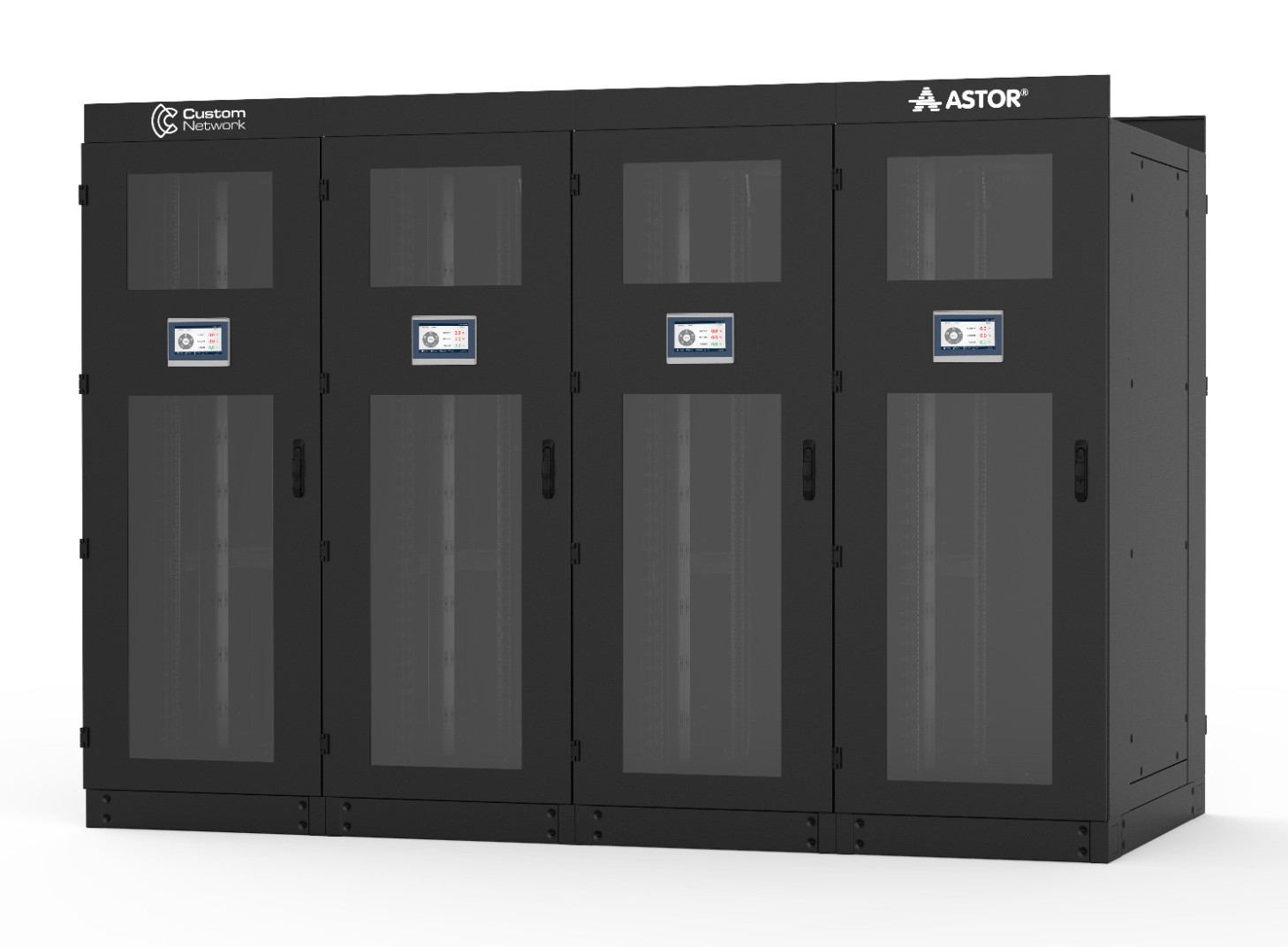
What is a Micro Data Center (Micro DC)? Benefits and Strategy.
Paradigm Shift in Data Centers: The Micro Data Center Strategy
As digital transformation accelerates, data generation and processing requirements are expanding from centralized architectures toward edge locations. IoT devices, smart manufacturing systems, real-time analytics and distributed operations are making it increasingly important to process data closer to where it is generated.
In this context, Micro Data Center (Micro DC) solutions provide an important infrastructure alternative, particularly for edge computing applications, by integrating critical data center infrastructure such as power, cooling, physical security and monitoring within a compact and modular architecture.
Micro data centers can provide the essential critical infrastructure functions of traditional data centers in a smaller and distributed architecture, helping organizations achieve greater operational flexibility and scalability. In this article, we examine the role of Micro Data Centers in the edge computing ecosystem, their modular architecture and their technical advantages.
To learn more about Pegon Proje's engineering and implementation approach in this field, visit our Micro DC Solutions page.
1. Architectural Integration: An Integrated System at Rack Scale
Micro data centers are more than just IT cabinets. Depending on project requirements, critical infrastructure components such as UPS systems, power distribution, precision cooling, fire detection and suppression, physical security and environmental monitoring can be integrated within a compact system.
Advanced Engineering and Adaptability
System components can be selected and configured according to project requirements. From enclosure dimensions and power capacity to cooling methods, monitoring and physical security systems, different infrastructure components can be designed according to the specific requirements of the facility.
Operational Continuity and Resilience
Depending on project requirements, appropriate grounding, shielding, power protection and mechanical protection measures can be implemented to improve system resilience against the electrical and physical conditions of its operating environment. Redundancy levels can also be designed according to application criticality and business continuity objectives.
Precision Cooling and Energy Efficiency
Enclosed or controlled cooling architectures used in micro data centers can help direct cooling specifically toward the area containing IT equipment. This enables a cooling approach focused on the IT load rather than conditioning an entire surrounding space.
What Is Power Usage Effectiveness (PUE)?
PUE is a data center infrastructure efficiency metric representing the ratio of total data center energy consumption to the energy consumed by IT equipment.
PUE = Total Data Center Energy / IT Equipment Energy
A PUE value theoretically approaching 1.0 indicates lower energy overhead from cooling, power conversion and other supporting infrastructure outside the IT equipment itself. However, measurements made within the defined boundary of a system such as a Micro DC may not represent the same scope as the PUE of an entire facility.
2. Proactive Security and Environmental Monitoring
In Micro Data Center infrastructure, IT equipment should be monitored not only in terms of power and temperature but also against physical and environmental risks. Depending on the project scope, different sensors and security systems can be integrated into the same management infrastructure.
24/7 Environmental Monitoring
Environmental parameters such as temperature, humidity, water leakage or flooding and smoke can be monitored through sensors. Alarm and status information from power and cooling systems can also be transmitted to centralized or remote monitoring platforms.
This approach can help identify potential problems before they reach critical levels and enable technical teams to respond more quickly.
Access Control
Depending on project requirements, access control methods such as card readers, electronic locks or biometric authentication can be used to restrict and record physical access to critical IT equipment.
Integrated Video Surveillance
IP-based camera systems can help physically monitor the Micro DC environment, record events and enable authorized teams to perform remote verification when required.
3. Edge Computing and Low-Latency Management
For applications such as IoT, smart manufacturing, image processing, automation and real-time analytics, transmitting all data to a distant centralized data center or cloud infrastructure may not always be the most appropriate approach.
With edge computing, computing and storage resources are moved closer to where data is generated. Micro data centers can provide a secure and controlled infrastructure for operating these resources at the locations where they are required.
This approach can help:
-
process data closer to its source,
-
reduce latency depending on the application and network architecture,
-
reduce the amount of data that must be transmitted to centralized systems,
-
reduce the dependency of certain applications on centralized connectivity.
For applications designed to operate locally, certain services may also be able to continue running on local infrastructure when connectivity to centralized systems is interrupted. The extent of this capability depends on the application architecture, network design and system requirements.
4. Modular Architecture and Scalable Investment Model
Traditional data center projects may require future capacity requirements to be estimated at the beginning of the project. In some cases, this can result in unused infrastructure capacity and higher initial investment.
With a Micro Data Center approach, infrastructure can be deployed at a capacity aligned with current project requirements and expanded as demand increases.
Infrastructure That Grows with Demand
-
deployment with an appropriate initial capacity,
-
capacity expansion as IT loads increase,
-
reduction of unnecessary initial capacity,
-
the ability to align infrastructure investment with operational growth.
The actual investment benefits should be evaluated on a project-specific basis according to system capacity, redundancy requirements, site conditions, cooling architecture and future expansion needs.
5. Where Are Micro Data Centers Used?
Industrial Facilities and Factories
In factories requiring smart manufacturing, automation, image processing, IoT and local data processing, Micro DC solutions can enable critical IT infrastructure to be positioned closer to production operations.
Offices and Commercial Buildings
Compact Micro DC solutions can be considered in buildings where creating a dedicated data center room is impractical or where available space is limited.
Distributed Remote Locations
Micro Data Centers can be used to host local IT infrastructure at branches, telecommunications locations and other distributed operations located away from centralized data centers.
Challenging Environmental Conditions
In mining, energy and industrial field applications, appropriate enclosure, cooling, filtration, power and physical protection designs can provide a more controlled operating environment for IT equipment.
6. What Should Be Considered When Designing a Micro Data Center?
When selecting a Micro DC solution, the decision should not be based solely on cabinet dimensions or existing IT equipment. The system should be evaluated as an integrated infrastructure.
During the engineering design process, the following should be evaluated together:
-
current and future IT loads,
-
UPS capacity and required redundancy level,
-
cooling capacity and cooling architecture,
-
fire detection and suppression requirements,
-
physical access security,
-
temperature, humidity, water and other environmental monitoring requirements,
-
remote monitoring and management requirements,
-
network connectivity and redundancy scenarios,
-
future capacity expansion.
In Summary
As data processing moves closer to the point where data is generated, Micro Data Centers have become an important data center approach for building modular, scalable and distributed IT infrastructure while supporting low-latency objectives.
Integrating power, cooling, physical security and monitoring systems within a compact infrastructure can help critical IT equipment operate in a controlled environment, particularly in factories, commercial buildings and distributed field locations.
To evaluate your organization's current IT load, future capacity requirements and site conditions and determine an appropriate infrastructure approach, visit our Micro DC Solutions page.
Phone: +90 533 920 99 14
Email: pegon@pegonproje.com